



Stanislas Lépine
1835 - 1892 (France)
Biography
A unique figure in 19th-century French painting, Stanislas Lépine established himself as a master of landscape painting, bridging the legacy of Corot and the early days of Impressionism.
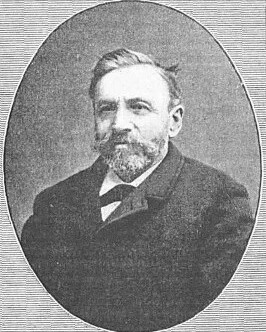
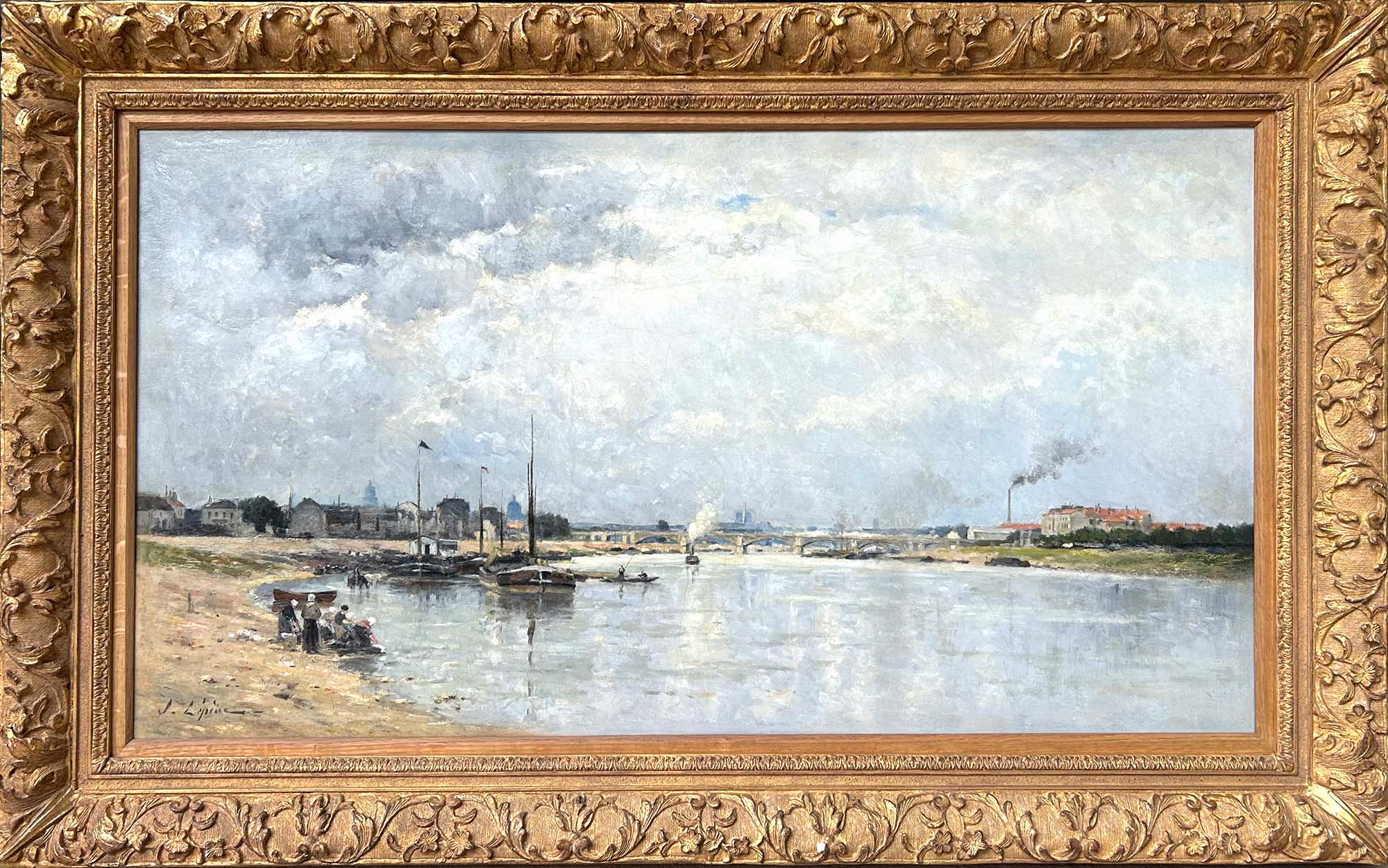
A French landscape painter, Stanislas Lépine occupies a unique place in the history of 19th-century painting. Closely associated with the Barbizon School and a forerunner of certain pre-Impressionist movements, he developed a body of work devoted to landscapes, the banks of the Seine, and views of Paris, characterized by the subtlety of his color harmonies and his attention to variations in light.
Born in Caen in 1835, Stanislas Lépine moved to Paris in the mid-1850s and devoted himself to landscape painting. Beginning in 1859, he frequented the studio of Jean-Baptiste Camille Corot, whose teaching had a decisive influence on his approach to nature, his sense of composition, and his quest for balance between light and atmosphere.
Lépine found his favorite subjects in river landscapes and Parisian neighborhoods. The banks of the Seine, bridges, barges, riverbanks, and the surroundings of Montmartre were all motifs he depicted with great sensitivity. Through these scenes of everyday life, he captured a Paris still marked by its working-class character and its landscapes in the midst of transformation during the 19th century.
His painting is distinguished by a delicate palette, dominated by silvery grays, pale blues, and soft tones. Attentive to atmospheric effects, Lépine captures the reflections on water, cloudy skies, and variations in light with a supple and nuanced brushstroke.
His work thus reflects an evolution in landscape painting toward a more direct observation of nature, foreshadowing certain concerns of the Impressionists, while retaining a personal pictorial style.
In 1874, Stanislas Lépine participated in the first Impressionist exhibition held in Paris, alongside artists such as Claude Monet, Pierre-Auguste Renoir, and Camille Pissarro. Although he did not fully align himself with the Impressionist movement, this participation underscored his affinity with the artists who were then revolutionizing the depiction of landscape and light.
Discreet and removed from high-society circles, Stanislas Lépine pursued an independent artistic exploration throughout his career. He died in Paris in 1892, leaving behind a body of work that is today appreciated for the subtlety of its atmospheres, the accuracy of his observation, and his contribution to the evolution of French landscape painting between the legacy of Corot and the emergence of Impressionism.