



Francis Picabia
1879 - 1953 (France)
Biography
Francis Picabia is one of the most unconventional and unique figures in modern art.
A painter, draughtsman and writer, he moved through the major avant-garde movements of the early 20th century without ever allowing himself to be confined to a single style.
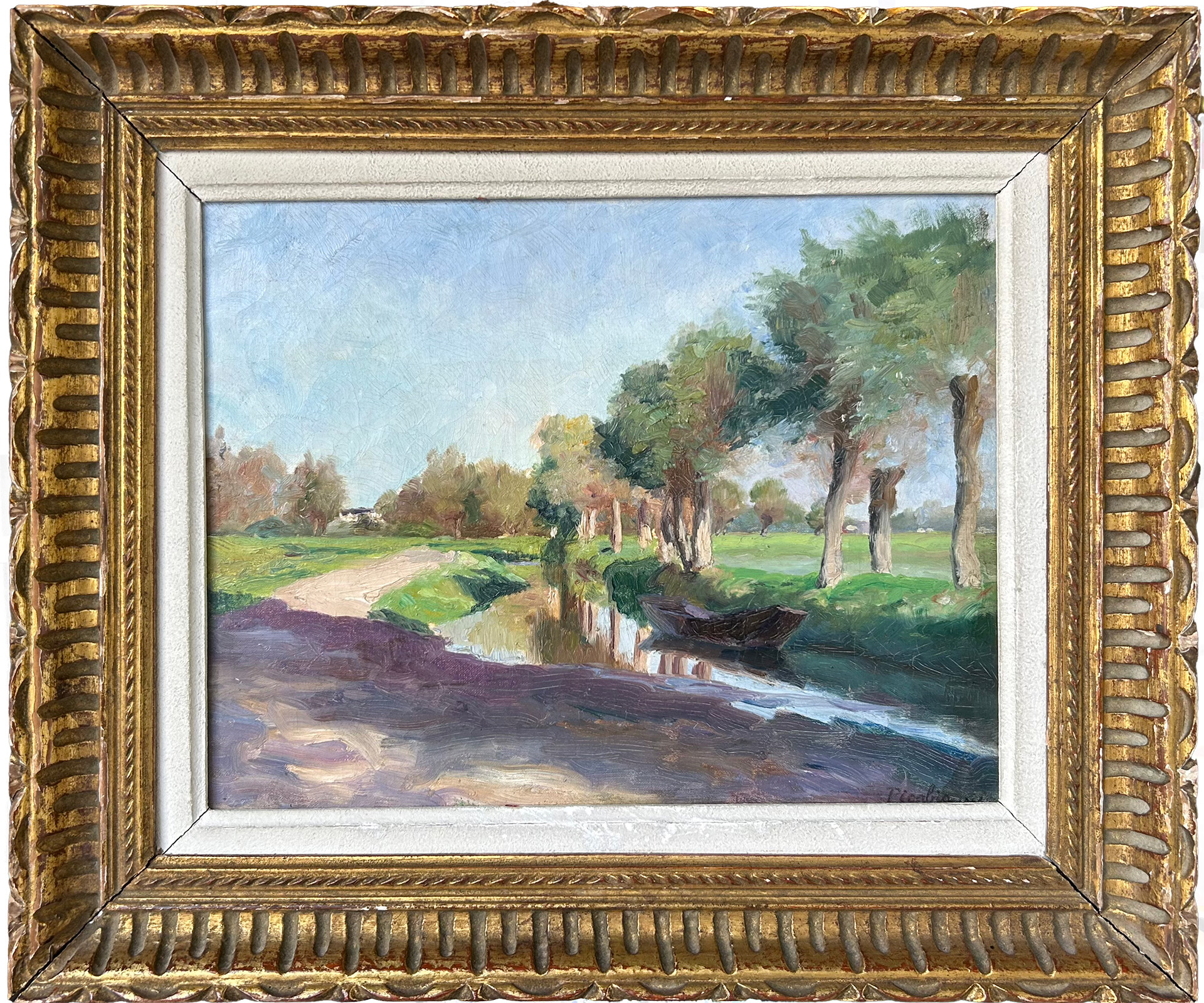
Born in Paris in 1879, Francis Picabia trained at the École des Arts Décoratifs. His early works were in the Impressionist tradition, before he gradually moved away from it to explore Cubism and Abstraction. In the early 1910s, he associated with Marcel Duchamp, amongst others, and was a member of the Section d’Or.
In 1913, Francis Picabia participated in the Armory Show in New York, a major exhibition in the history of Modern Art. His stays in the United States strengthened his interest in modernity and machinery, which soon became a central motif in his compositions.
During World War I, he became involved with the Dada movement, of which he, along with Marcel Duchamp, became one of the leading figures.His mechanomorphic works reinterpret industrial designs and mechanisms to challenge artistic conventions.
In the late 1920s, Picabia developed his famous Transparences, compositions in which multiple figures and motifs are superimposed on a single surface.
In the 1930s and 1940s, he returned to a more figurative style of painting, even drawing some of his models from photographs in popular magazines. After World War II, he turned once again to abstraction.
Francis Picabia died in Paris in 1953. Impressionism, Cubism, Abstraction, Dadaism, Figurative Art: this succession of breaks with tradition constitutes the very essence of his work. Rejecting all dogma and repetition, Picabia is now regarded as a profoundly modern artist, whose freedom and constant capacity for reinvention occupy a major place in the history of 20th-century art.