

'/%3E%3C/svg%3E)

Eugène Boudin
1824 (France) - 1898 (France)
Biography
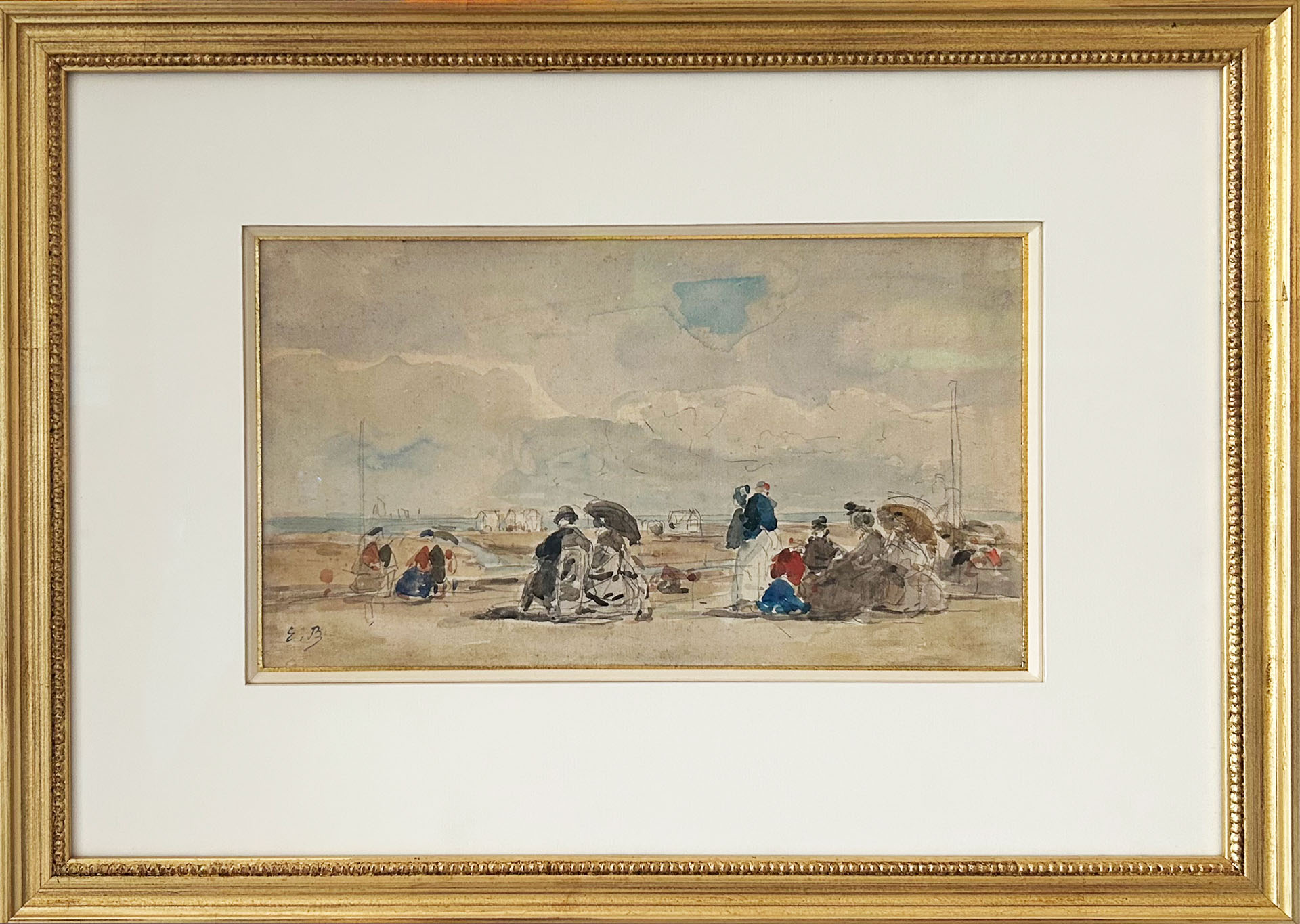
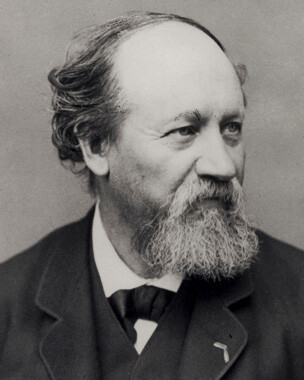
Eugène Boudin was a French painter from Normandy, recognised as one of the forerunners of Impressionism. He left his mark on art history by placing light, air and changing skies at the heart of his painting.
Early life and education
Born in Honfleur (Calvados) on 12 July 1824. His family moved to Le Havre in 1835, which gave him an early insight into ports, boats, the sea and, above all, the open skies over the estuary. As a young man, he worked in a stationery and framing shop in Le Havre, where he rubbed shoulders with artists and began to draw.
Early career and shift towards landscape painting
In the mid-1840s and 1850s, Boudin devoted himself entirely to painting: he gave up his stationery and framing business and began painting ‘from life’, in the open air, which enabled him to capture the light and the atmosphere. In 1854, he stayed at the Saint-Siméon farm in Honfleur, then undertook numerous trips to Normandy (Trouville, Deauville, Étretat) and Brittany. In 1859, he exhibited for the first time at the Salon in Paris.
Artistic maturity and recognition
Boudin was acclaimed for his studies of atmosphere and the sky, elements that foreshadowed Impressionism: the painter Claude Monet recognised him as a master. He travelled extensively: to Brittany, the Netherlands, Italy and, towards the end of his life, Venice. In 1892, he was made a Knight of the Legion of Honour (some sources give this date).
Final years and legacy
Eugène Boudin died in Deauville on 8 August 1898. His work influenced Impressionism and continues to be widely exhibited: he was dubbed the ‘king of skies’ by Camille Corot for his mastery of the sky and light. His unique style is reflected in the philosophy of the Galerie Hurtebize, which champions art, beauty and light.